Selling a Condo vs a House in South Florida: What's Different?
If you own a condo in Delray Beach or a single-family home in Boca Raton, the selling process looks pretty similar on the surface. You clean the place, hire an agent, list it on the MLS, and wait for offers. But beneath that surface, the two property types attract different buyers, follow different pricing rules, and come with very different hurdles. Here is what you need to know if you are selling a condo versus a house in South Florida in 2026.
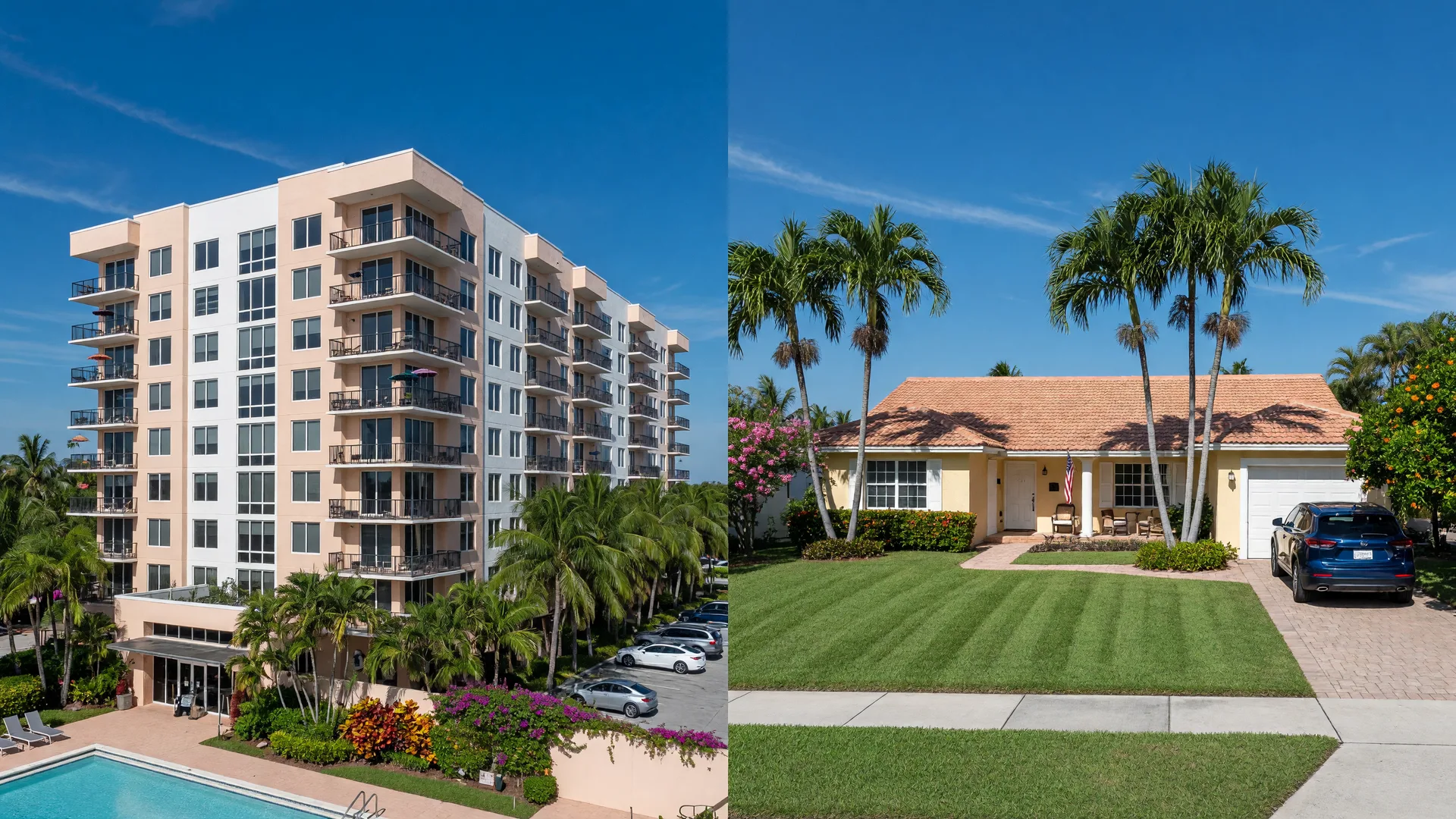
Quick Answers: Condo vs House in South Florida
The short answers sellers search for most. Full detail below.
Which sells faster in South Florida: a condo or a house?
Single-family homes sell faster. In Palm Beach County in August 2026, single-family supply sat at about 3.5 months while condos and townhomes ran closer to 7 months, and single-family sellers received a median 95% of original list price versus about 93% for condos. Condo inventory is higher, so condo sellers should plan for a longer timeline.
Do condos sell for less than houses in South Florida?
Yes, typically less. In Delray Beach, the citywide median closed sale price was $545,000 (three months ending May 2026), while the condo and co-op median was about $248,250. In Boca Raton, the median sale price was about $854,000 (three months ending August 2026), well above published condo medians.
Why is selling a condo harder than selling a house?
Condo sales face extra hurdles: high HOA fees that shrink the buyer pool, association approval processes, possible special assessments, and stricter financing rules. Buyers also review association documents and budgets, which extends the timeline.
Do HOA fees hurt my condo's sale price?
Yes. Buyers fold monthly fees into what they can afford, so higher fees mean lower offers. South Florida condo fees have climbed sharply since stricter reserve and inspection rules took effect, and special assessments can be a major sticking point during negotiations.
The Price Gap: What the Numbers Say
The first and most obvious difference is price. Single-family homes in South Florida sell for roughly two to two and a half times what condos sell for. The gap is driven by land value, square footage, and buyer demand.
Data note (updated September 25, 2026): the figures below come from the latest published reports: Redfin city-level data, MIAMI Association of Realtors county data, and MLS-based statistics, all covering August 2026 or the most recent three-month period. South Florida data moves month to month, so treat these as a directional snapshot, not a guarantee of what your property will sell for.
Here is the most recent data for the area:
| Area | Single-Family Home | Condo / Townhouse |
|---|---|---|
| Delray Beach (three months ending May 2026) | ~$545,000 median closed sale price, citywide | ~$248,250 (condo and co-op median) |
| Boca Raton (three months ending August 2026) | ~$854,000 median sale price | Published medians vary widely by segment and source |
| Boynton Beach (August 2026 MLS data) | ~$567,500 median sold price | Roughly 700 condos and townhomes active |
| Palm Beach County (August 2026) | Median 95% of original list price; 3.5 months supply | Median ~93% of original list price; ~7 months supply |
Medians vary by market segment and month. A current comparative market analysis on your specific property will always be more reliable than county-level averages.
These numbers matter because they affect who your buyer is. A $275,000 condo buyer is often a first-time buyer, a snowbird looking for a seasonal home, or an investor. A $650,000 house buyer is often a family, a professional couple, or a retiree upgrading from a condo. Different buyers mean different questions, different financing, and different timelines.
Learn more about pricing strategy for your specific property type.
Speed to Sale: Houses Sell Faster
In the current South Florida market, single-family homes are selling faster than condos. In Palm Beach County, single-family supply sat at about 3.5 months in August 2026 while condos and townhomes ran closer to 7 months, and single-family sellers received a median 95% of original list price versus about 93% for condos. That gap shows up in timelines: less supply and closer-to-list pricing mean houses generally move faster and with less negotiation. Some Palm Beach County and oceanfront condo segments are taking even longer than the county average.
Why do condos take longer? Several factors:
- Buyer pool is smaller. Fewer people are looking for condos than houses, especially in a market where families are driving demand.
- HOA approval process. Condo buyers must get approved by the association, which adds a week or two to the timeline.
- Due diligence takes longer. Buyers want to review association financials, reserve studies, and meeting minutes before committing.
- Financing is stricter. FHA and conventional loans have stricter requirements for condo complexes, including owner-occupancy ratios and financial health of the association.
If you are selling a condo, be prepared for a longer timeline. That does not mean you cannot sell quickly, but you need to price it right and market it effectively from day one.
The HOA Factor: The Biggest Difference
If you own a condo, you already know the HOA situation. The monthly fees in South Florida have risen sharply, driven by new state laws that require associations to fully fund reserves for structural repairs and conduct milestone inspections. The median monthly condo fee in South Florida jumped from roughly $567 in 2019 to $900 in 2024, a 59% increase, and fees have kept climbing since, up roughly 15% year over year in some markets. And in many high-rise condo buildings, fees exceed $1,900 per month.
For context, single-family home HOA fees in the same area typically range from $150 to $400 per month, and many houses have no HOA at all.
Watch for special assessments. Under Florida's post-Surfside law (SB 4D), associations must complete milestone inspections and fully fund reserves, and many are passing those costs to owners. Some buildings have issued assessments of $10,000 or more per unit. Before you list, ask your association what is funded, what is planned, and what buyers will see in the condo questionnaire.
Here is the side-by-side comparison:
| Cost Factor | Condo | Single-Family Home |
|---|---|---|
| Typical HOA fee | $400 to $1,900+ per month | $150 to $400 per month (or none) |
| Insurance covered | Master policy covers building structure | You buy your own homeowners insurance |
| Exterior maintenance | Included in HOA | You pay out of pocket |
| Special assessment risk | Higher risk, especially in older buildings | Lower risk (you control repairs) |
| Reserve requirements | Mandatory structural reserves (post-Surfside law) | Not applicable |
What this means for sellers: High HOA fees directly reduce what buyers can afford to pay for your condo. A buyer with a $2,000 monthly housing budget can afford a higher mortgage payment if the HOA fee is $300 versus $900. That means two identical condos, one with a $500 HOA and one with a $900 HOA, will sell at different prices even if the units themselves are the same.
Before listing your condo, make sure your association's financials are in order. Buyers are requesting and reviewing association documents more carefully than ever. A well-funded reserve and a history of stable fees are major selling points.
Condos vs Houses: Side-by-Side Comparison
| Factor | Condo | Single-Family Home |
|---|---|---|
| Typical buyer | First-time buyers, snowbirds, investors | Families, professionals, retirees upsizing |
| Days on market (South Florida, latest data) | Longer: ~7 months of condo supply in Palm Beach County | ~3.5 months of supply; Delray ~90 days, Boca ~79 days on market |
| Pricing range | $200K to $500K (most common) | $400K to $1M+ (most common) |
| Marketing focus | Location, amenities, affordability, low-maintenance lifestyle | Space, yard, privacy, school zones, neighborhood |
| Buyer financing | Stricter (condo must be FHA-approved, owner-occupancy ratios) | Standard mortgage process |
| Closing hurdles | HOA approval, estoppel letter, documents review | Inspection, appraisal, title search |
| Seller preparation | Declutter unit, prep HOA documents | Curb appeal, staging, repairs, landscaping |
| Seasonal demand | Strong snowbird season (Oct-Apr) | Year-round, peak spring-summer |
Marketing Your Condo vs Your House
The marketing strategy for a condo is different from the strategy for a house. Here is what works for each:
Condo Marketing
- Highlight building amenities (pool, gym, security, parking)
- Showcase the view and natural light
- Emphasize low-maintenance lifestyle
- Feature proximity to dining, shopping, and beach
- Provide association financials proactively
- Target snowbirds and downsizers
House Marketing
- Focus on curb appeal and landscaping
- Highlight square footage and floor plan
- Emphasize privacy and outdoor space
- Feature school district and neighborhood
- Showcase recent upgrades and renovations
- Target families and professionals
In both cases, professional photography and walkthrough videos make a huge difference. A dedicated property website can give your listing serious visibility. Learn more about how Ryan markets his listings.
Preparing Your Condo for Sale
Condo sellers have fewer prep items than house sellers, but the ones that matter are critical:
- Declutter and depersonalize. Condos are smaller, so every square inch counts. Less furniture makes rooms feel bigger.
- Check with your HOA. Some associations have rules about showings, lockboxes, or signage. Know them before you list.
- Gather association documents. Having the current financial statements, reserve study, meeting minutes, and insurance certificate ready saves weeks during the sale.
- Put away personal items. Buyers want to imagine themselves in the space. Your photos and personal collections get in the way.
- Consider a pre-listing inspection. Condo buyers are often nervous about the condition of the unit. A clean inspection report builds confidence.
For houses, the prep list is longer. Read our full guide to preparing your home for sale for a complete checklist.
The Closing Process: Condos Are More Complicated
Both condo and house sales involve inspections, appraisals, and title work. But condo sales add extra steps:
- HOA estoppel letter. The association provides a document showing the current fee status, any unpaid assessments, and the financial health of the association. This is required for closing.
- Buyer approval. Most condo associations require buyers to submit an application, provide financial documentation, and be approved by the board. This can take 1 to 3 weeks.
- Right of first refusal. Some associations have the right to match a buyer's offer and purchase the unit themselves. This is rare but worth knowing about.
- Association document review. Buyers in Florida have a statutory right to review condo documents, and many have a 3-day or 15-day review period baked into the contract.
These extra steps mean condo closings take longer. A typical house closing in South Florida takes 30 to 45 days. A condo closing often takes 45 to 60 days. Plan accordingly.
Which Is Better to Sell Right Now?
That depends on what you own and what your goals are.
If you own a single-family home, you are selling in a strong market. Houses are commanding premium prices, selling faster, and attracting serious buyers. In Delray Beach and Boca Raton, well-priced homes in good condition are seeing strong interest from families and professionals. The key is to price it right from day one, stage it well, and market it to the right audience.
If you own a condo, the market is more challenging but still active. The key to a successful condo sale is pricing realistically based on the HOA fee structure, having your association documents ready, and targeting the right buyer pool. Condos in well-managed associations with reasonable fees and good amenities are selling. Condos in older buildings with high fees, special assessments, or weak reserves are sitting on the market longer.
In either case, the most important factor is how you position the property. Professional photography, a walkthrough video, a dedicated property website, and targeted digital marketing can make the difference between a quick sale at top dollar and a listing that lingers. See how Ryan's marketing approach works for both condos and houses.
For more neighborhood-specific data, visit RyanParkerRealty.com for detailed guides on Delray Beach, Boca Raton, Highland Beach, and other South Florida communities.
Ready to Sell? Let Us Talk Through Your Options
Whether you are selling a condo or a house, the process starts with understanding what your property is worth in today's market. Ryan Parker provides free, no-obligation market analyses for both property types. He will walk you through the comps, the timeline, and what you can expect to net from your sale.
Call or text Ryan at 561-915-8590 to schedule your free consultation. You can also request your free market analysis online.

Ryan Parker
South Florida Realtor, Coldwell Banker Realty
SL3571861
For comprehensive real estate education covering buying, selling, owning, and investing, visit RyanParkerHomeGuide.com. For neighborhood guides and area information, visit RyanParkerRealty.com.
Want my opinion on what's worth doing before you list?
I'll tell you what actually adds value and what to skip. Honest advice, no upselling.
No pressure. No obligation. Just an honest answer.